
Nature Loss and National Security Debated in Parliament
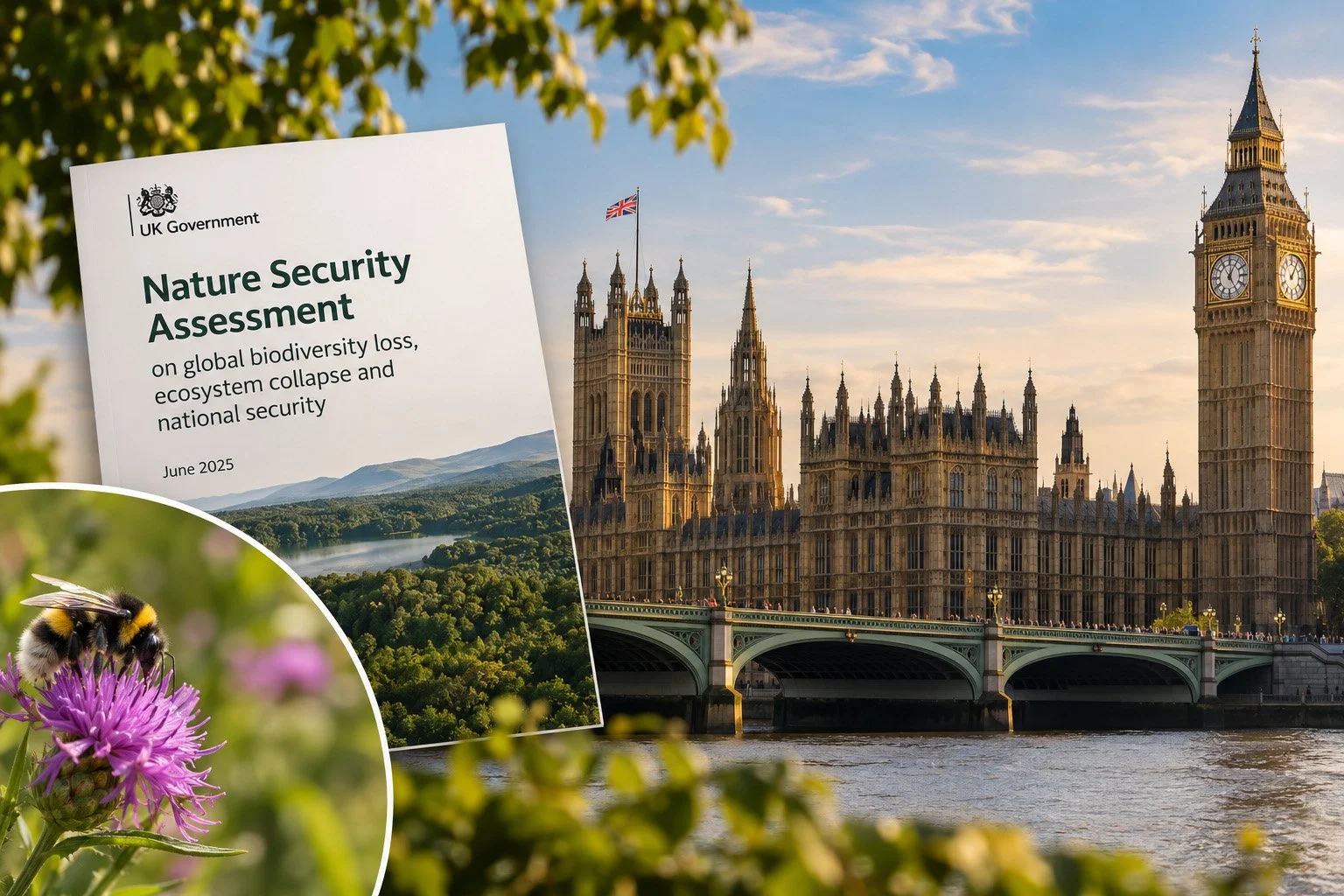
A parliamentary debate has highlighted the growing recognition that biodiversity loss and ecosystem collapse are not just environmental concerns, but serious threats to the UK's national security, food supplies and economic stability.
On 3 September 2026, MPs debated the Government's Nature Security Assessment on Global Biodiversity Loss, Ecosystem Collapse and National Security, following a public petition calling for greater parliamentary scrutiny of the report.
The assessment, produced with input from national security and environmental experts, examines how the degradation of ecosystems around the world could threaten the UK's security and prosperity. It highlights risks including disruption to global food supplies, increased competition for natural resources, economic instability and the potential for conflict and migration.
Why does nature matter for national security?
Healthy ecosystems provide essential services that society and the economy depend upon, including food production, clean water, pollination, climate regulation and protection against flooding.
As biodiversity declines and ecosystems become less resilient, these services are increasingly at risk. The consequences could extend far beyond the natural environment, affecting food prices, international trade, public health and political stability.
The assessment reinforces the message that protecting and restoring nature is not simply about conserving wildlife. It is also about safeguarding the foundations of a healthy, secure and prosperous society.
Public pressure helps bring the issue to Parliament
The debate demonstrated how public engagement can influence the political agenda.
A petition calling for parliamentary scrutiny helped secure the debate, while several MPs referred to concerns raised by constituents and the impact of local screenings of the People’s Emergency Briefing film.
These screenings, organised by community groups around the country, have helped explain the scale of the nature crisis and encouraged people to discuss the implications with their elected representatives.
It is an encouraging example of how local awareness-raising, community action and direct engagement with MPs can contribute to national discussions.
Questions remain over transparency
The Government's handling of the assessment has also attracted criticism. Publication was delayed, and the version eventually released to the public contained redactions.
During the debate, MPs questioned whether more of the assessment should be made publicly available, arguing that people need to understand the risks facing the country.
The Government has maintained that some information cannot be released for national security reasons. However, concerns remain about whether sufficient information has been shared to enable informed public debate and effective scrutiny.
What happens next?
The parliamentary debate represents an important step in recognising the connections between nature, climate change and national security. However, awareness alone will not reverse biodiversity loss.
The challenge now is to translate that recognition into policies and practical action that protect and restore ecosystems, strengthen resilience and address the underlying causes of environmental decline.
For Green Elmbridge and other local environmental organisations, the debate also underlines the value of bringing people together, sharing information and helping communities make their voices heard.
Further reading: